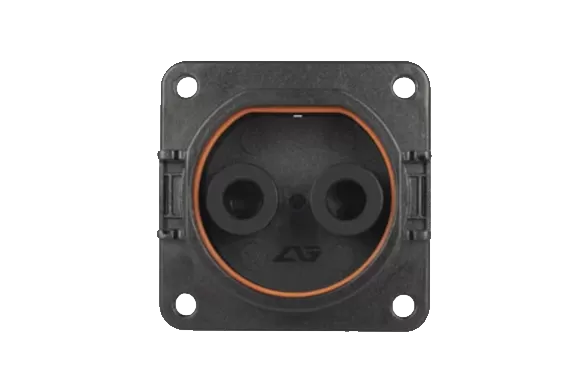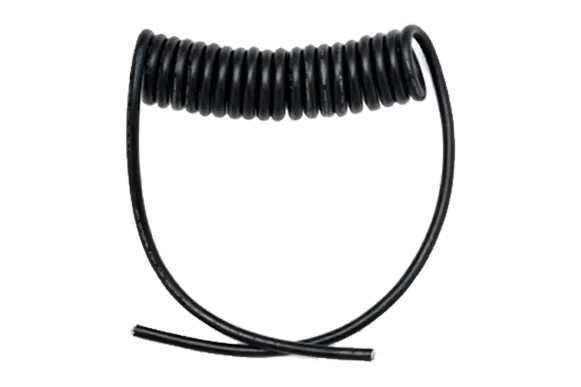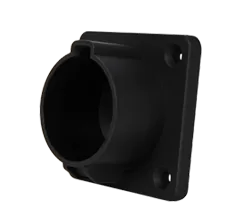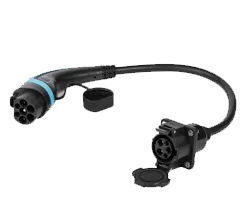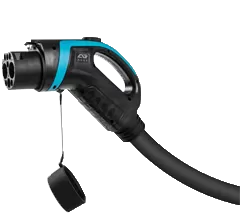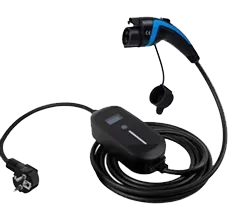
Electric vehicles are going to be the way the vast majority of us drive, with Type 1 Type 2 charging cables to connect and recharge the battery.
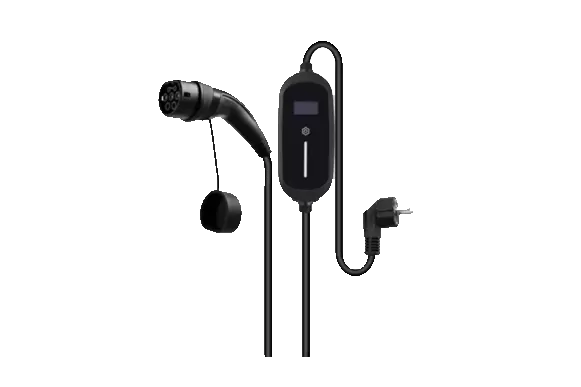
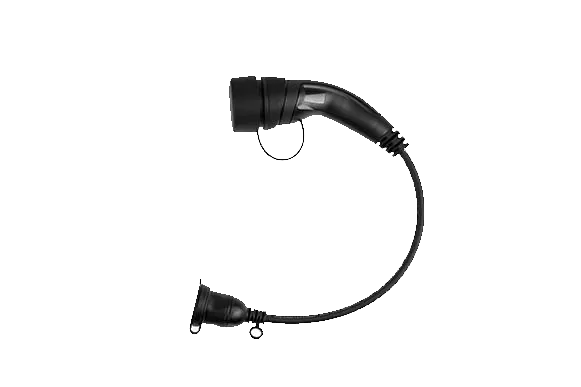
So what’s the difference between Type 1 and Type 2 charging leads for EV or PHEV? It’s pretty straightforward. The cable you buy to charge at home or carry with you to replenish the battery energy from public charging points will have a Type 1 or Type 2 plug on one end that fits with your EV or PHEV’s connection.
Differences between the two types of EV charging cables are:
In Europe, the Type 2 inlet is the standard for charging cables while the Type 1 inlet is the dominant variation in Asian, Japanese and American markets.
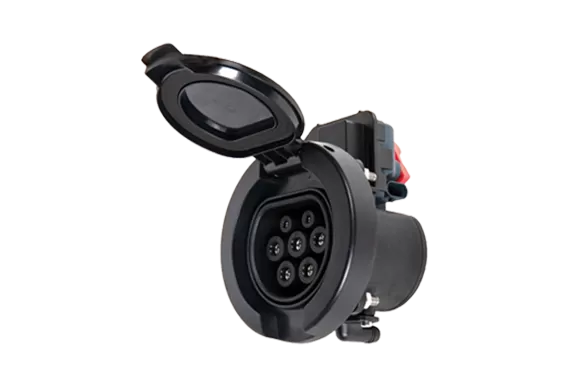
Type 1 plug is a 5-pin design and has a latch that keeps the plug in place and prevents it from being dislodged from the charger socket, while the Type 2 models, with 7-pin design don’t have these latches. Instead, the vehicles that utilise Type 2 plugs have a locking pin that locates and secures the plug in place.
It’s a very secure system, and only the EV or PHEV owner would be able to unplug the charging cable from the vehicle connector. Models that support Type 1 plug would not have a lock pin and so the charging cable can be unlocked by anyone.
EV and PHEV cables
Both Type 1 and Type 2 plugs have pins to transmit the power load and an earthing mechanism for safety.
In addition, Type 2 cables have resistors that communicate with the EV or PHEV, to ensure that the charging process runs smoothly. The vehicle ‘knows’ that it is plugged in, and other resistor functions maintain a uniform supply of power, detecting the strength of the cable to draw power accordingly. The resistors in the Type 1 cable detect whether the cable is plugged in will turn off the charger when the lever is pressed to unlatch the plug.
Also, Type 1 is a single-phase charging cable and Type 2 charging cables are available in single or three phase.
EVs and hybrids currently on the market are fitted with these two different types of charging sockets and many of the newer vehicles coming to market, even from the Asian market, are now being supplied with Type 2 connectors.
Type 1 charging cable
These vehicles use Type 1 as standard:
Citroen C-Zero, Ford Focus Electric, Mitsubishi Outlander PHEV, Kia Soul EV, Nissan Leaf 2012 – 2017, Peugeot (uses both types), Toyota Prius, Vauxhall.
Type 2 charging cable
Type 2 charging cables can be used with these cars:
Audi Etron, BMW i3, Hyundai, Jaguar, KIA, Ranger Rover, Renault, Mercedes Benz EQC, Mini Countryman, Nissan Leaf 2018, Porsche, Smart, Tesla, Toyota, Volkswagen, Volvo XC T8.
Type 2 charging cables are ideal for high-capacity EVs. And it’s wise to select a longer charging cable for EVs with charging sockets on one side of their body so that they’ll easily reach the charging point.
As a professional electric vehicle charging equipment manufacturer, AG Electrical can provide you with different electric vehicle chargers such as Type 1、Type 2 、GB/T、CCS2、CHADEMO and so on.
Understanding the technical specifications of your charging cable is essential for ensuring compatibility and charging efficiency. Below is a detailed Comparison Matrix highlighting the core differences between the two international standards:
| Feature | Type 1 (SAE J1772) | Type 2 (IEC 62196-2) |
| Standard Region | North America, Japan, South Korea | Europe, Australia, Global Standard |
| Pin Configuration | 5-Pin Design | 7-Pin Design |
| Locking Mechanism | Manual Latch (Can be unlatched by anyone) | Automatic Locking Pin (Controlled by the vehicle) |
| Phases Supported | Single-Phase Only | Single & Three-Phase |
| Charging Power | Up to 7.4 kW (Typical) | Up to 22 kW (AC Three-Phase) |
| Safety Standard | IEC 62196 Type 1 | IEC 62196 Type 2 |
| User Experience | Manual hook attachment | Plug-and-lock seamless integration |
Not sure which one fits your car? Contact our technical team for a free consultation.
Also, we provide OEM/ODM service with the completely supply chain from concept design to MP(Mass Production).
While the industry is shifting towards Type 2 standards in Europe, many reliable EV models still utilize the Type 1 (SAE J1772) interface. This discrepancy can often lead to charging challenges at modern public charging stations.
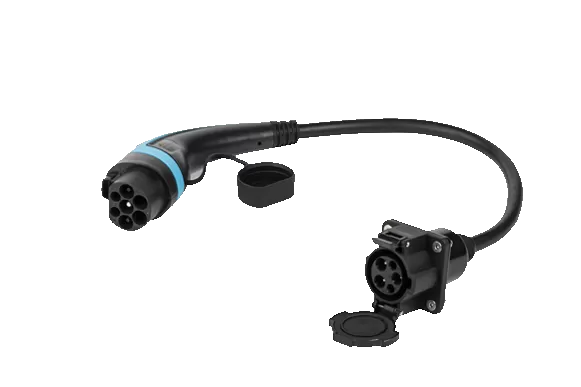
If you own a Type 1 vehicle but need to charge at a Type 2 tethered station, we offer professional-grade Type 2 to Type 1 EV Adapters and conversion cables. Our adapters are engineered to ensure:
Seamless Connectivity: Instant compatibility between IEC 62196-2 station outlets and SAE J1772 vehicle inlets.
Fast & Stable Charging: Supports maximum current delivery without power loss or overheating.
Plug-and-Play Simplicity: Compact, durable design for easy storage and daily use.
Certified Safety: Built with high-flame-retardant materials and rigorous quality control to protect your vehicle's battery.
Don't let connector types limit your journey. View our full range of EV Adapters here.
As experienced team, we are capable of design and manufacture Industrial products with strict quality control system.
Do not hesitate to contact us if you need to.

OEM/ODM service
The primary differences lie in regional standards and power phase support. Type 1 (SAE J1772) is the dominant standard in the North American and Japanese markets, supporting only single-phase charging. In contrast, Type 2 (IEC 62196-2) is the European and global standard, which is more versatile as it supports both single-phase and high-speed three-phase charging for faster energy delivery.
You cannot plug them in directly because the pin configurations are fundamentally different (5-pin for Type 1 vs. 7-pin for Type 2). However, you can easily bridge this gap by using a high-quality Type 2 to Type 1 adapter or a dedicated conversion cable. This allows owners of Type 1 vehicles to utilize the widespread Type 2 public charging infrastructure.
Yes, Type 2 systems provide enhanced security. While Type 1 utilizes a simple manual latch that can often be dislodged by anyone, the Type 2 (IEC 62196) standard incorporates an electronic locking pin mechanism. This pin is controlled and secured by the vehicle itself, ensuring the cable cannot be unplugged by unauthorized persons until the owner unlocks the car.
Most modern EVs, even those from Asian manufacturers, are increasingly adopting the Type 2 connector as the global standard for AC charging. For high-capacity EVs, Type 2 is the preferred choice due to its ability to handle higher power loads and its integration with CCS2 for DC fast charging.