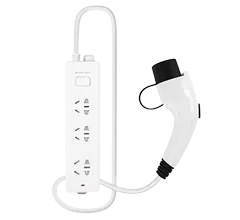
If you own an electric car, you must be no stranger to the electric car charger. So how can we correctly use the electric car charger to charge the lithium-ion battery?
The most suitable charging process of lithium-ion battery can be divided into four stages: trickle charging, constant current charging, constant voltage charging and charging termination.
1. Trickle charging
Trickle charging is used to precharge fully discharged battery cells (recovery charging). When the battery voltage is lower than 3V, first charge the battery with a maximum constant current of 0.1C.
2. Constant current charging
When the battery voltage rises above the trickle charging threshold, increase the charging current for constant current charging. The current of constant current charging is between 0.2C and 1.0c. The current during constant current charging is not required to be very accurate, and quasi-constant current is allowed. In the current design of electric car charger, the current often rises with the rise of battery voltage, so as to minimize the heat dissipation problem on the transmission transistor.
Constant current charging greater than 1C will not shorten the whole charging cycle, so this practice is not recommended. When the car is charged at a higher current, the battery voltage will rise more rapidly due to the overvoltage of electrode reaction and the voltage rise on the internal impedance of the battery. The constant current charging stage will be shorter, but the total charging cycle time will not be shortened because the time of the following constant voltage charging stage will increase accordingly.
3. Constant voltage charging
When the battery voltage rises to 4.2V, the constant current charging terminates and the constant voltage charging phase begins. For optimum performance, the tolerance of voltage regulator should be bigger than + 1%.
4. Charging termination
Unlike nickel batteries, continuous trickle charging of lithium-ion batteries for electric vehicles is not recommended. Continuous trickle charging will lead to electroplating effect of metal lithium. This will make the battery unstable and may lead to sudden automatic and rapid disassembly.
The above four stage charging method takes about 2.5 to 3 hours to complete the charging of the thoroughly discharged batteries
As a professional EV charging equipment manufacturers, AG Electrical will keep up with the trend of the times and strive to provide you with the highest quality electric vehicle charging equipment to ensure your charging safety.