GB/T stands for “Guobiao Tuijian”, which refers to the recommended national standards of China.
In the EV charging industry, a GB/T charger is an electric vehicle charger designed according to Chinese national standards such as GB/T 20234 and GB/T 18487, and it is widely used for electric vehicles in China.
GB/T charging refers to the electric vehicle charging method defined by China’s national EV charging standards, primarily GB/T 18487 and GB/T 20234. A GB/T charger supplies electrical power from the grid to an electric vehicle and communicates with the vehicle’s battery management system (BMS) to ensure safe, stable, and efficient charging.
GB/T charging supports both AC and DC charging modes, depending on the charger type:
GB/T AC charging uses an onboard charger inside the vehicle to convert AC power into DC power for the battery.
GB/T DC charging delivers direct current straight to the battery through an off-board DC charger, enabling much faster charging speeds.
The GB/T charging process follows a standardized sequence to ensure safety and compatibility:
Physical Connection
The GB/T plug is connected to the vehicle’s GB/T charging socket, establishing a secure mechanical and electrical connection.
Communication and Handshake
The charger and the vehicle exchange data using the GB/T 27930 communication protocol, confirming voltage, current limits, and battery status.
Power Delivery
In AC charging, power flows through the onboard charger.
In DC fast charging, power is delivered directly to the battery via the GB/T DC connector.
Monitoring and Protection
During charging, the system continuously monitors temperature, insulation resistance, and current levels to prevent overheating, overcurrent, or electrical faults.
Charging Completion
Once the battery reaches the target state of charge, the charger automatically stops power delivery and unlocks the connector.
Designed specifically for the Chinese EV market
Supports AC charging and DC fast charging
High safety level with mandatory communication and protection mechanisms
Widely used in GB/T charging stations, public infrastructure, and fleet charging systems
In short, GB/T charging provides a reliable and standardized solution for powering electric vehicles in China, ensuring interoperability between chargers, vehicles, and charging networks.
Thanks to the boom in the new energy industry, the electric vehicle charger industry also develops rapidly. Many countries engage in fierce competition specific to the electric vehicle charger market, among which the main one is the electric vehicle charging standard. At present, there are three main groups of charging standards for new energy vehicles: Type1 (American standard); Type2 (European standard), utilizing the SAE J1772 standard led by the international society of automotive engineers (SAE); and GB/T, Chinese standard as well as CHAdeMO (Japanese standard), first introduced in 2010 by the Japan Electric Vehicle Association and the Japan Electric Vehicle Charging Association.
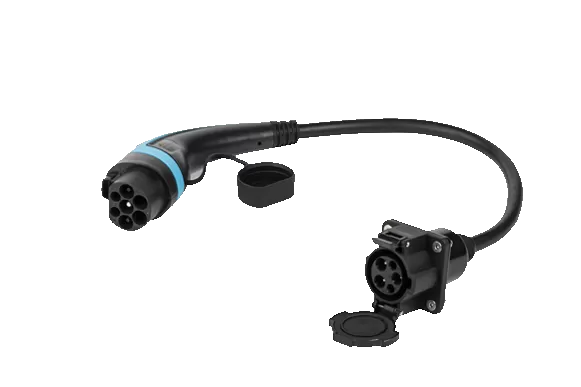
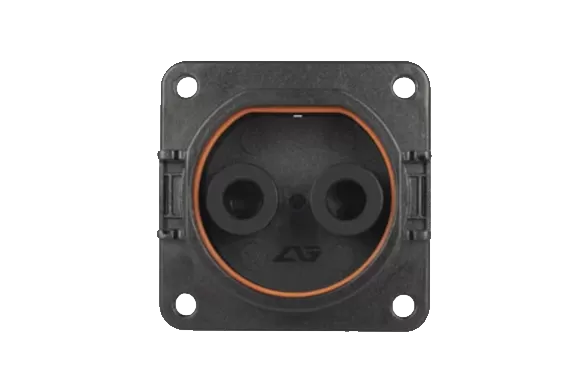
As the name implies, the GB/T charger of AG ELECTRICAL is based on the Chinese standard.
On December 28, 2015, five newly revised national standards for charging interfaces and communication protocols for electric vehicles were issued in Beijing by the Standardization Administration of the Chinese General Administration of Quality Supervision, Inspection and Quarantine together with the National Energy Administration, the Ministry of Industry and Information Technology and the Ministry of Science and Technology. The new standards took effect on January 1, 2016. The GB/T standard is divided into three parts: the general requirements, AC and DC and the communication between the charger and BMS, specifically listed as follows:
(1) GB/T 18487.1-2015 Conducting Charging Systems for Electric Vehicles – Part 1: General Requirements
(2) GB/T 20234.1-2015 Connectors for Conducting Charging for Electric Vehicles – Part 1: General Requirements
(3) GB/T 20234.2-2015 Connectors for Conducting Charging for Electric Vehicles – Part 2: Alternating Current Charging Interfaces
(4) GB/T 20234.3-2015 Connectors for Conducting Charging for Electric Vehicles – Part 3: Direct Current Charging Interfaces
(5) GB/T 27930-2015 Communication Protocol between Off-board Conductive Charger and Battery Management System of Electric Vehicle
The introduction of GB/T standard improves the safety and compatibility of charging.
(1) Security
GB/T standards increase the functions like charging interface temperature monitoring, electronic lock, insulation monitoring, discharge circuit, etc., elaborate the vehicle interface of DC charging security protection measures and explicitly prohibit unsafe charging mode application. Thanks to the efforts, personnel electric shock, equipment combustion and other accidents are effectively avoided, and the safety of electric vehicles and users during charging are guaranteed.
(2) Compatibility
The type and structure of AC-DC charging interface are compatible with the original standard. The GB/T standard modifies the size of some contacts and mechanical locks, but the new and old plugs and sockets can cooperate with each other, and the electronic locking device added to the DC charging interface does not affect the electrical connection between the new and old products. Users only need to update the communication protocol version to realize the basic charging function of new power supply equipment and electric vehicles.
The GB/T charger manufactured by AG ELECTRICAL complies with the regulations and requirements of GB/T20234.2-2015 and GB/T18487.1-2015, which, with higher compatibility, can charge all electric vehicles made in China and correctly and effectively convert them to applicable point current.
GB/T charging supports both AC and DC charging.
GB/T AC charging is defined under GB/T 20234.2 and uses the vehicle’s onboard charger to convert AC power into DC power.
GB/T DC charging follows GB/T 20234.3, delivering direct current straight to the battery for fast charging.
This dual-mode design allows GB/T chargers to be used for both normal and fast charging applications.
The main difference between GB/T and Type 2 lies in regional standards and connector design.
GB/T is the national EV charging standard in China.
Type 2 (IEC 62196-2) is the AC charging standard widely used in Europe.
GB/T and Type 2 connectors are not mechanically compatible, and they follow different electrical and communication standards. As a result, vehicles designed for one standard cannot directly use chargers designed for the other without additional equipment.
All electric vehicles manufactured for the Chinese domestic market use GB/T chargers.
This includes EVs from major Chinese automakers as well as international brands producing China-market models. GB/T chargers are widely deployed in public charging stations, residential installations, and fleet charging systems throughout China.
Type 2 chargers cannot be directly used with GB/T vehicles.
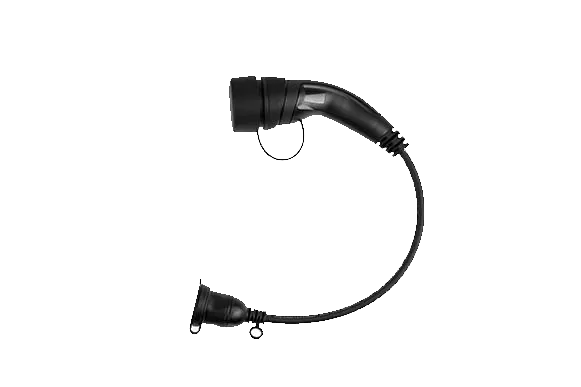
However, in specific scenarios, a Type 2 to GB/T adapter can be used for AC charging only, provided that the adapter supports the correct voltage, current rating, and communication requirements. DC fast charging is not compatible via simple adapters due to fundamental differences in standards and protocols.