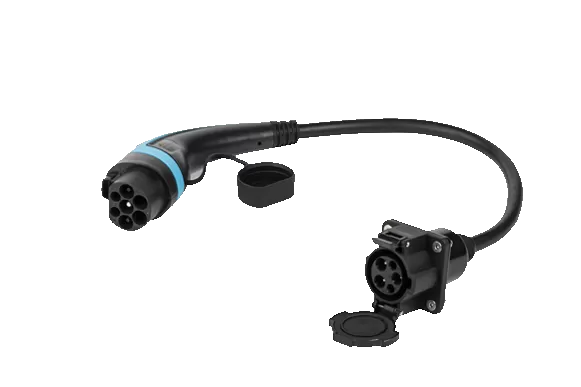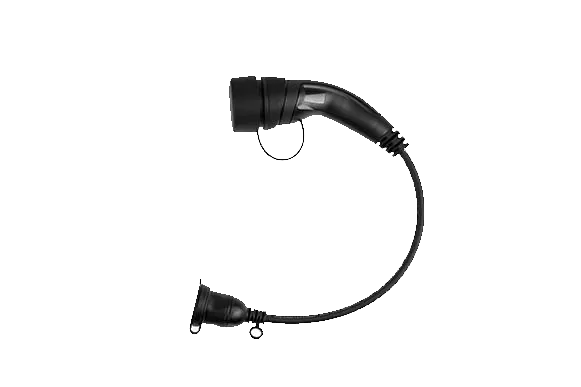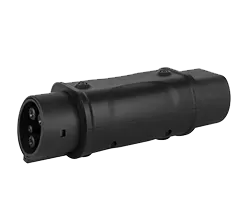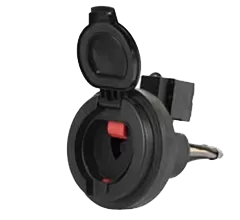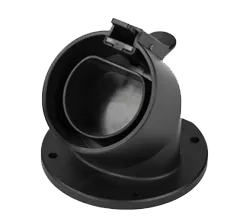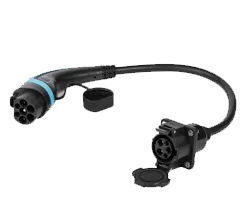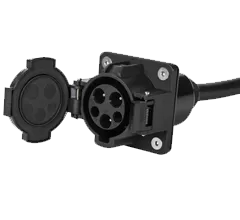
Quick Answer: Using a high-quality EV extension cord will NOT significantly reduce charging speed as long as the cable's rated current (Amps) matches or exceeds your charger's output. For example, a 32A Type 2 extension cable will maintain full speed for a 7kW home charger.
Yes, using an extension cord is a practical solution for EVs, provided you use a dedicated EV-rated extension cable. Standard household extension leads are not designed for continuous high-load EV charging and can be a fire hazard. Longer cords are always better because they provide more flexibility and convenience. You can park your car a little further away from the charging station and still charge seamlessly. Many underground parking lots in buildings have charging stations, but you may not find a parking space near the charging point. In this case, an electric vehicle extension cord comes in handy.
However, it is important to choose the right extension cord. Most manufacturers offer electric vehicle chargers with high rated power to achieve fast charging. However, many electric vehicle extension cords have lower rated power, and it is not recommended to use extension cords with lower rated power to extend your electric vehicle charger.
When you use a low-power electric vehicle extension cable to connect the charger, the power supplied to the electric vehicle will be equal to the rated power of the extension cable. Therefore, the amount of electricity reaching your electric vehicle battery will be reduced, and more energy will be lost, and your electric vehicle will need more time to charge. In addition, frequently using low-power extension cords can damage your charger.
Therefore, it is necessary to use an electric vehicle extension cord with similar rated values and circuit breakers as the main charger. This will ensure that there is no power loss, and the electric vehicle will charge quickly. Using extensions with appropriate rated power can also keep your charger healthy and extend its service life.
One of the most concerning issues for electric vehicle owners is whether an electric vehicle extension cord will lower the charging speed. The charging speed may decrease. However, if you choose the right cable, the difference can be negligible. Let's look at how the charging speed changes. The charging speed depends on the rated power of the electric vehicle cable and extension cord, and the final charging power output will be equal to the lower output power of the charger or cable.
Assuming that the charging current of your electric vehicle cable is 16 amps and the cable output is 10 amps. In this case, the final charging output will be 10 amps. Now, suppose your charger output is 10 amps, and the rated power of your electric vehicle extension cord is 16 amps. Even now, the final charging output will still be 10 amps. To ensure the best charging speed, use extension cables with more amps than the main charger, which will ensure that the charging rate does not decrease.
To ensure your electric vehicle charges at its maximum potential speed without safety risks, the rated amperage (Amps) of your extension cord must meet or exceed the output of your main charger.
The following table illustrates how choosing the wrong cable can lead to reduced speeds or hazardous overheating:
| Charger Output Power | Recommended Extension Cord | Impact on Charging Speed | Safety Level |
| 16A (3.6kW) | 16A or 32A Extension | No Change (Full Speed) | High |
| 32A (7.2kW) | 32A Extension Only | No Change (Full Speed) | High |
| 32A (7.2kW) | 16A Extension | Reduced (Significant Slowdown) | Risk of Overheating |
Expert Recommendation: If you are unsure about your future charging needs, we always recommend purchasing a 32A Type 2 Extension Cable. It is "backwards compatible," meaning it safely handles 16A charging today while being ready for a more powerful 7.2kW or 22kW wallbox tomorrow.
No, it is highly discouraged. We strongly advise against connecting multiple extension cords to reach a longer distance. Every additional connection point increases electrical resistance and creates a potential point of failure. This can lead to excessive heat buildup and even melt the connectors during long, high-current charging sessions. For maximum safety and efficiency, always use a single, continuous cable of the required length (e.g., a single 10m or 15m cable) rather than linking two shorter ones.
The difference is negligible for high-quality cables. Theoretically, a longer cable has higher electrical resistance, which can cause a minor "voltage drop." However, in real-world conditions with AG Electrical's premium copper wiring, the difference in charging speed between a 5m and a 10m cable is less than 1%.
The most critical factor is the wire gauge (thickness)—for example, a 32A rated cable (6mm² wires) will maintain much better efficiency over long distances than a thinner, lower-spec cable. As long as the cable is rated correctly for your charger's output, you won't notice a slowdown.