As electric vehicles (EVs) continue to surge in popularity, understanding the infrastructure that powers them is crucial for both drivers and industry professionals. Two of the most common terms you'll encounter are the Type 1 cable and the Type 2 cable. While they serve the same essential purpose—charging your EV—they are not interchangeable.
This definitive guide from AG Electrical, one of the leading EV charging cable manufacturers, will break down the key differences, applications, and regional standards of Type 1 and Type 2 charging cables, helping you make an informed decision.
Feature | Type 1 (SAE J1772) | Type 2 (IEC 62196-2) |
Primary Region | North America, Japan | Europe, UK, Australia, most of Asia |
Connector Design | 5-pin, with a physical locking clip | 7-pin, with a software-based locking mechanism |
Current Type | Single-Phase AC | Single-Phase or Three-Phase AC |
Locking Mechanism | Mechanical clip on the connector | Electronic locking via the vehicle |
Typical Power Level | Up to 7.4 kW (Single-Phase) | Up to 22 kW (Three-Phase) or 7.4 kW (Single-Phase) |
The Type 1 connector, standardized as SAE J1772 cable, is the dominant plug for AC charging in North America and Japan.
Design: It features a 5-pin design that includes two AC power pins, a ground pin, and two signal pins (Proximity Pilot and Control Pilot) that manage communication and safety between the car and the charger.
Locking Mechanism: A notable physical feature is the mechanical locking clip on the connector handle. This clip manually secures the plug to the vehicle's inlet to prevent disconnection during charging.
Functionality: The Type 1 cable is designed primarily for single-phase AC power. This makes it perfectly suitable for home charging and public AC charging stations in its regions, typically delivering up to 7.4 kW.
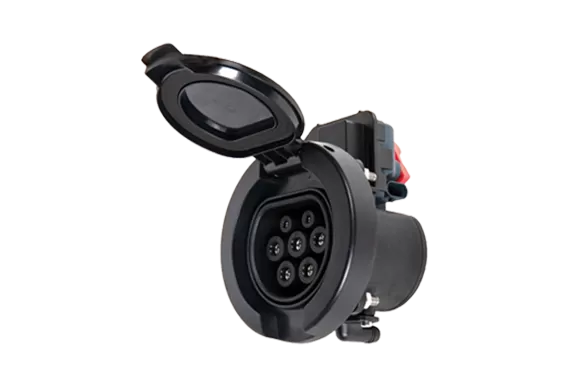
The Type 2 charger socket, standardized as IEC 62196-2 and often called the "Mennekes" connector, is the official standard for the European Union and many other regions.
Design: It is a more versatile 7-pin connector. The extra pins allow it to support both single-phase and three-phase AC power.
Locking Mechanism: Unlike Type 1, the Type 2 cable uses an electronic locking system. When you plug it in, the vehicle automatically engages a locking pin to secure the connection, which only releases once charging is complete or the user unlocks it via the car or charger.
Functionality: Its ability to handle three-phase power is its biggest advantage. In regions with three-phase grid infrastructure, this allows a Type 2 charging cable to deliver significantly higher power levels—up to 22 kW or even 43 kW on supported vehicles—drastically reducing AC charging times.
The choice is primarily determined by your vehicle and your location.
You need a Type 1 cable if:
You drive an EV from an American or Japanese manufacturer (e.g., older Nissan Leaf, Chevrolet Volt) in North America or Japan.
Your home wallbox or local public charger is equipped with a Type 1 socket.
You need a Type 2 cable if:
You are in Europe, the UK, Australia, or most Asian countries.
You drive virtually any new pure-electric car sold in the European market (e.g., models from Volkswagen, BMW, Mercedes, Audi).
You want to leverage faster three-phase AC charging where available.
Pro Tip: Most EVs are sold with a portable charging cable that matches their inlet. However, many drivers purchase a second cable to keep at home or as a spare. Always check your vehicle's charging port before buying.
Understanding the technical specifications is the first step. The next is sourcing reliable, safe, and high-performance components. This is where AG Electrical excels.
As a professional manufacturer with a fully integrated factory, we don't just understand the difference between Type 1 and Type 2 cables—we produce them to the highest global standards. Our Manufacturing Execution System (MES) ensures precision and quality control for every product that leaves our facility.
Our EV Charging Cable Solutions Include:
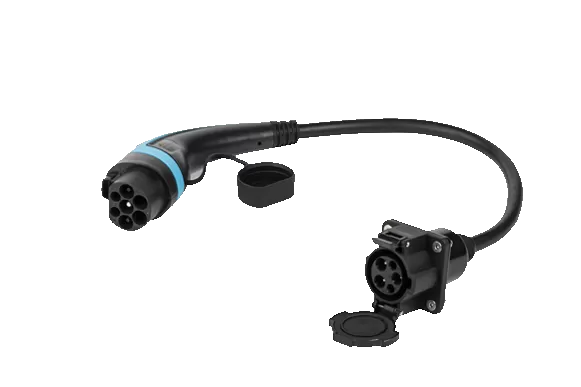
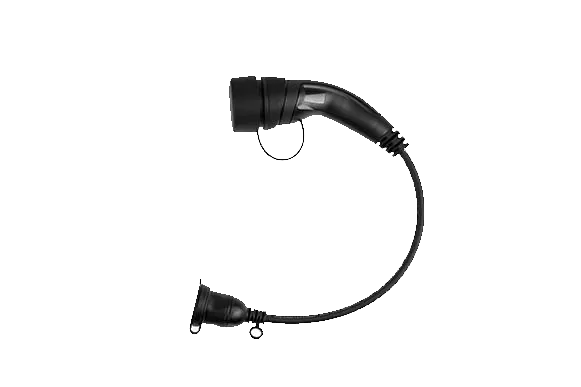
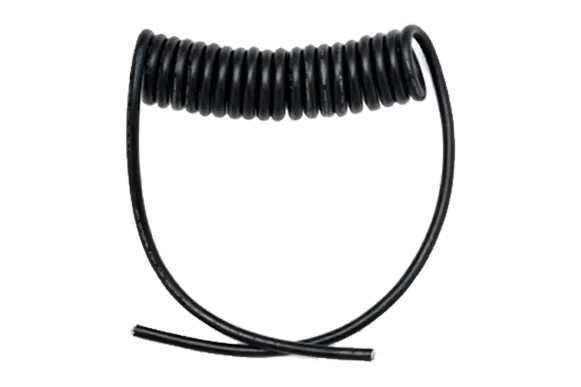
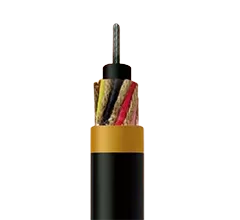
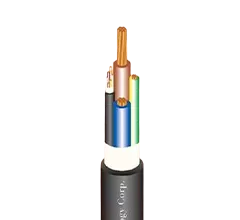
High-Quality AC Cables: Durable, flexible Type 1 and Type 2 cables built with superior insulation and conductivity for fast, safe charging. (IEC 62196-2, SAE J1772)
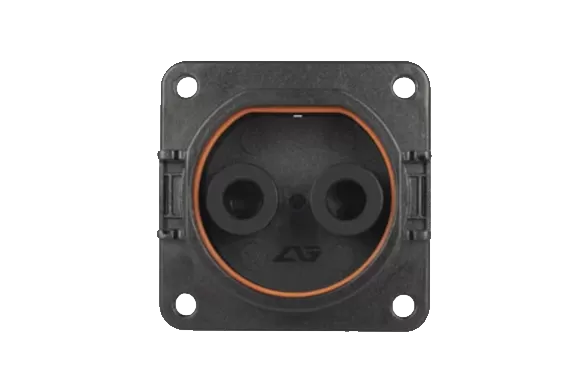
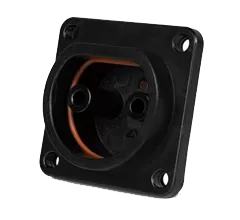
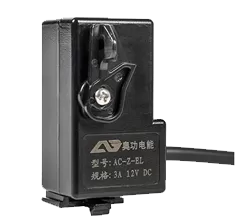
Robust Charging Sockets: Reliable and efficient sockets compatible with various connector types, featuring weather resistance and smooth power delivery.
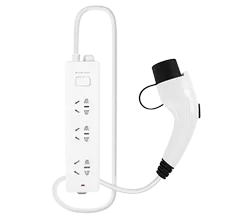
Portable Chargers & Adapters: Compact solutions for on-the-go use and cross-compatibility between different plug types.
Are you a charge point operator, a utility company, or a brand looking to launch your own line of EV charging equipment?
Leverage our expert OEM/ODM services. We provide end-to-end EV charging solutions, from concept design and prototyping to mass production. Our experienced engineering team can help you develop custom Type 1 or Type 2 charging cables and other components that meet your specific design, performance, and certification requirements (including TUV, CE, UKCA, and IATF 16949).
Why Partner with AG Electrical?
Global Certification: Our products comply with international standards, ensuring market access worldwide.
Proven Manufacturing Expertise: Decades of experience in cable technology and a strong supply chain.
Customization Focus: We tailor solutions from raw materials to finished product design.