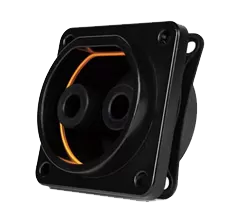
For years, the electric vehicle industry has relied strictly on conductive plug-in hardware to transfer power from the grid to automotive battery packs. However, as we move through 2026, the focus within the ev charging equipment market is rapidly shifting toward maximizing user convenience and automation. This is where wireless EV charging (static and dynamic induction) enters the mainstream spotlight.
By eliminating physical cables, tethered connectors, and mechanical wear, wireless charging redefines the charging experience for premium passenger cars, autonomous taxi fleets, and heavy-duty commercial logistics vehicles. This comprehensive guide breaks down the current technological reality of wireless power transfer (WPT) in 2026, reviews the top systems currently available, and highlights what commercial B2B buyers must analyze before investing.
At its core, wireless EV power transfer utilizes the principles of electromagnetism, transitioning through specific operational states often categorized by engineers under global charging mode frameworks.
The system relies on two main components:
The Ground Pad (Transmitter): Installed on or flush-mounted directly inside the parking space surface, connected to the electrical grid.
The Vehicle Pad (Receiver): Mounted underneath the chassis of the electric vehicle, connected directly to the onboard battery management system (BMS).
When the vehicle parks over the transmitter pad, an alternating current (AC) passes through the ground coil, generating a localized magnetic field. The receiver coil underneath the car captures this magnetic field and converts it back into high-voltage direct current (DC) to charge the battery cells. This process operates seamlessly, utilizing advanced magnetic resonance to maintain high efficiency even if the vehicle is slightly misaligned or parked at varying ground clearances.
To help engineering teams and fleet managers evaluate infrastructure assets, the table below contrasts 2026 wireless charging capabilities against standard plug-in topologies:
Charging System Profile | Average Power Output | Peak Transfer Efficiency | Primary Hardware Footprint | Best Operational Application |
Resonant Wireless (Static) | 3.3kW to 11 kW (Up to 22 kW) | 90% – 93% | Flush-mount Ground Pad & Internal Vehicle Receiver Coil | High-end Residential Garages, Urban Cab Stands, Autonomous Fleets |
Dynamic Wireless (In-Motion) | 50 kW to 100 kW | 85% – 89% | Electrified Highway Test Tracks & Under-road Copper Induction Loops | Long-haul Commercial Freight Logistics, Urban Transit Bus Corridors |
Conductive AC Standard | 7.4 kW to 22 kW | 94% – 97% | Wallboxes, Pedestals, and heavy-duty tethered cables | Standard Workplace, Multi-Family Home Charging Setup networks |
For wireless charging to achieve universal deployment, hardware must interface smoothly with existing global charging networks and vehicle architectures.
Interoperability and Communication Protocols: Modern wireless systems utilize highly synchronized communication protocols similar to the foundational logic explained in our introduction to EVC working principles. This ensures that grid power output perfectly matches what the vehicle's specific battery configuration can safely accept.
Adapting to Regional Standards: While wireless charging aims to bypass physical plugs, the vehicle’s internal power electronics must still bridge the gap with traditional wired standards during long-distance travel. For example, vehicles deployed in regions utilizing the specialized GBT charger network or European standard grids must feature secondary conductive ports alongside their wireless receiver pads to ensure total charging versatility.
Synergy with Vehicle-to-Grid Networks: In the near future, wireless grids will not only push power into vehicles but will also support reverse power flows. Integrating wireless pads with residential microgrids allows homeowners to seamlessly engage in V2G vs. V2H vs. V2L energy sharing protocols without ever needing to touch a physical cable, transforming parked vehicles into automated decentralized power plants.
Answer: Yes, wireless EV charging pads are exceptionally safe under extreme weather conditions. Because the internal induction coils are hermetically sealed inside heavy-duty, high-impact enclosures boasting top-tier IP68 or IP69K ingress protection ratings, they are entirely waterproof and dustproof. Rain, ice, dirt, or standing water on the ground pad will not cause electrical shorts or lower transmission safety, making them ideal for outdoor public parking lots.
Answer: All premium, commercially certified wireless EV charging systems in 2026 are legally required to integrate two vital safety mechanisms: FOD (Foreign Object Detection) and LOD (Living Object Detection). If a metallic item (like a coin or aluminum foil) or a living creature (like a cat) enters the magnetic field space between the ground and vehicle pads, the system instantly de-energizes within milliseconds to prevent overheating or injury.
Answer: While older wireless prototypes suffered from high power losses, modern 2026 magnetic resonance systems achieve impressive transfer efficiencies ranging between 90% and 93%. This puts their performance nearly on par with premium Level 2 AC conductive plug-in systems. As long as the vehicle is parked within the system's recommended alignment tolerance (typically $\pm 10\text{ cm}$ laterally and longitudinally), energy wastage is minimal.
As global ev charging technology races toward a smarter, more automated future, sourcing componentry from an agile, forward-thinking manufacturer is essential to staying competitive. At AG Electrical Technology Co., Ltd., we continuously monitor emerging wireless milestones while manufacturing the industry's most reliable, IATF 16949-certified conductive cables, interfaces, and distribution systems that form the backbone of modern EVSE networks.
Whether you are looking to ruggedize your current hardware offerings or prepare your commercial catalog for next-generation grid integration, our international engineering division is ready to assist.
This is the last one.