Email Us

EV Charging Wiki

DC charging allows the car to be charged significantly faster than AC charging. Currently, the most common charging stations are 50 kWh, but 150 kWh stations already appear, and 270 kWh and 350 kWh chargers are emerging, which is reflected in the constant need to develop more efficient connectors.

CCS - Type 1 and Type 2 (Combined Charging System)

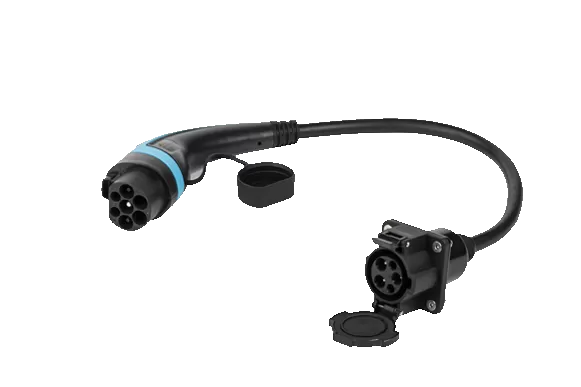
CCS, or combined charging system, is a beautifully elegant solution for fast DC charging. These are the original plugs, either Type 1 or Type 2, to which two more pins are added at the bottom. In the case of DC charging, these two lower pins participate in the charging itself and from the upper part only the communication pin and the earth conductor, which provides the reference point for the protection systems, are used. These connectors can withstand power of up to 350 kW.

It is currently the most popular type of DC connector. Type 1 is common in the United States, while Type 2 CCS is used in Europe. The European Parliament's efforts to allow only CCS 2 and other plugs to be phased out of Europe have not been successful, but this standard is still winning, mainly because the car has only one socket. When using the CHAdeMO connector, the car must always have two sockets.

CCS are not compatible with CHAdeMO and GB / T charging stations because they use different communication protocolsa, so special adapters are needed and they are not easy to obtain.


ccs-type-1-and-type-2-(combined-charging-system).jpg


Friends, have you ever experienced this? During the National Day holiday, you were all excited about a spontaneous trip, or perhaps driving hundreds of miles to visit family. However, just as you were...
Read More
Everything You Need to Know About Mode 2 Charging Cable
06/09
2025
In electric vehicles, Mode 2 charging refers to using electric vehicle charging equipment within a home power grid. This charging method requires a Mode 2 charging cable, also known as a portable char...
Read More
Introduction to EVC (Electric Vehicle Charger) Types and Working Principles
06/23
2025
An EVC (Electric Vehicle Charger) is a device used to charge electric vehicles. It serves as a vital interface between the vehicle and the charging station, transmitting electrical energy to the EV ba...
Read More
1. Introduction: The Multi-Unit Residential Building (MURB) EV Charging ChallengeAs electric vehicle (EV) adoption hits record numbers in 2026, single-family homeowners enjoy the simplicity of pluggin...
Read More
1. Introduction: The Evolution of EV Charging TechnologyFor years, the electric vehicle industry has relied strictly on conductive plug-in hardware to transfer power from the grid to automotive batter...
Read More
Get a Quote? Get in Touch With Us Now!
Wireless EV Charging 2026: Current Reality, Best Systems, and What Buyers Should Know
1. Introduction: The Evolution of EV Charging TechnologyFor years, the electric vehicle industry has relied strictly on conductive plug-in hardware to transfer power from the grid to automotive batter...
Learn More
Best EV Home Charging Setups for Apartments & Multi-Unit Buildings in 2026
1. Introduction: The Multi-Unit Residential Building (MURB) EV Charging ChallengeAs electric vehicle (EV) adoption hits record numbers in 2026, single-family homeowners enjoy the simplicity of pluggin...
Learn More
Type 1 vs Type 2 EV Charging Cable: The Ultimate Guide
As electric vehicles (EVs) continue to surge in popularity, understanding the infrastructure that powers them is crucial for both drivers and industry professionals. Two of the most common terms you&#...
Learn More
Add:
KeyanErlu, Yizheng, Yangzhou, Jiangsu