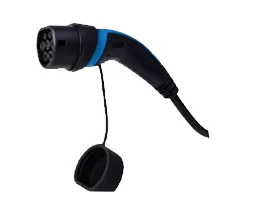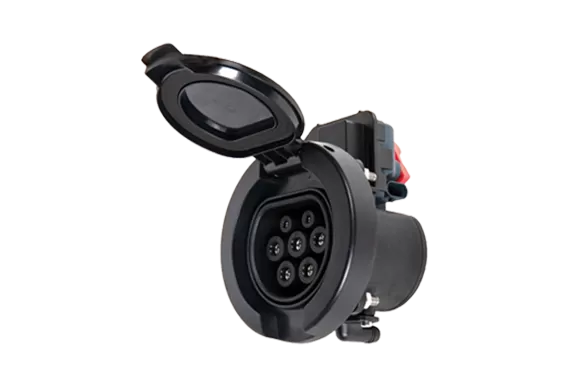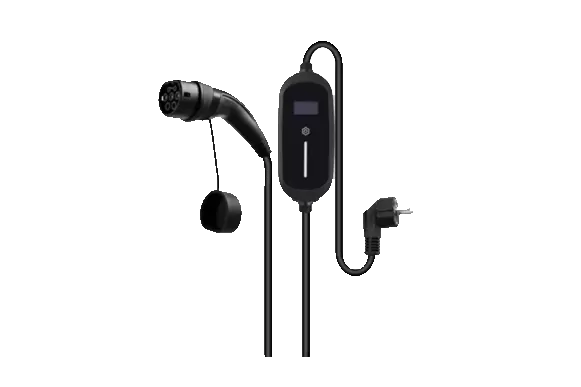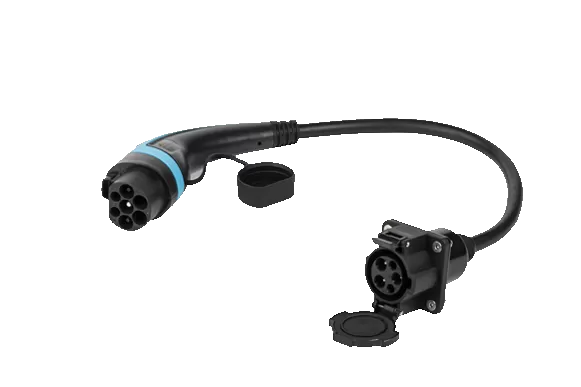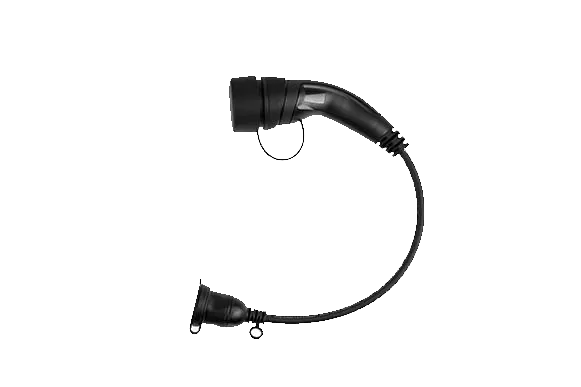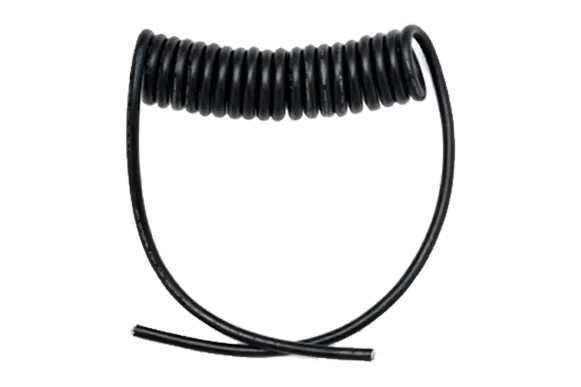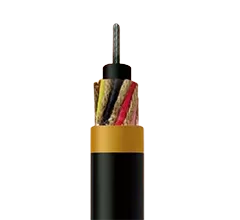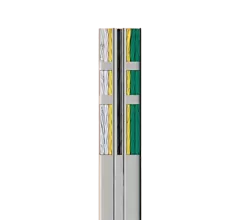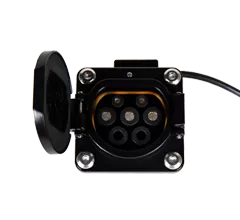
Coiled and straight EV charging cables are two common cable designs used for electric vehicle charging.
A coiled EV charging cable offers better cable management and reduced trip hazards, while a straight EV cable provides a longer usable working length and easier storage.
Choosing between them depends on factors such as charging distance, storage space, safety requirements, and usage scenarios.
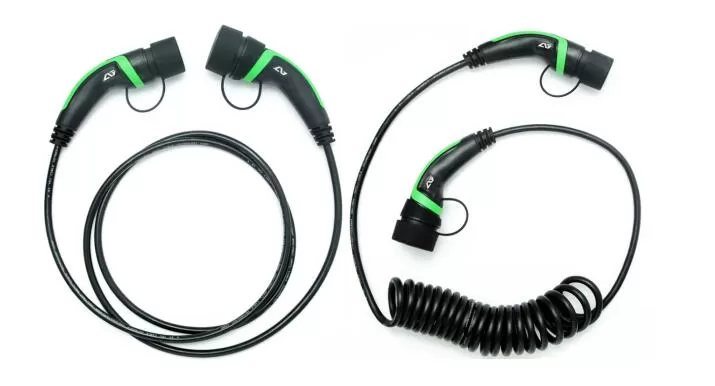
EV charging cables are an integral part of an electric vehicle’s (EV) charging system. The cable is also highly vulnerable due to the frequent handling and exposure to potential damage. They can be found in two design options, coiled or straight. It is also possible to make a straight cable appear coiled by slipping it into a spiral wrap.
Choosing which is best is difficult as there are several factors involved. Let’s discuss some of the key issues that may affect your purchase decision if you are considering the alternative.
Coiled EV charging cables need to be significantly longer than straight cables to achieve the same effective working distance. In practice, a coiled cable may need to be around 8 metres long to cover the same usable reach as a 5-metre straight EV charging cable.
This additional length increases cable weight and storage requirements, which can be inconvenient in daily use. For charging locations where the parking space is far from the charger, an 8m EV charging cable is often required. In such scenarios, a straight 8m EV charging cable usually provides more reliable and predictable reach than a coiled cable, which loses usable length due to its spiral design.
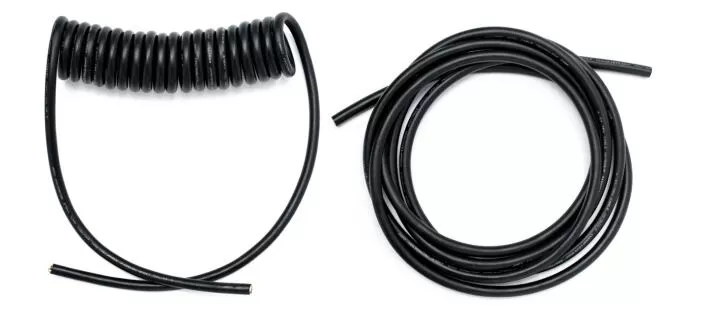
As said, coiled EV cables must be longer than straight cables to cover the same length. This means they will also take up more space when stored. Even on a wall cord holder, the extra coils may make it harder to keep your environment neat. More so as you cannot control the number of coils as with a straight cable whose loops you can more easily manipulate. If a portable charging cable, then you will need still need more space to stash it in your boot.
Though, while you may not be able to control the number of loops with a coiled cable, it is easy to put away quickly as you do not have to waste time winding it around. It naturally returns to its tight natural coil that does not need further manipulation.
Coiled EV charging cables are great for avoiding tripping hazards. The tight coil will often elevate the cable above ground. It will remain suspended while connected between the charging station and the charge port of the EV. This makes it easier to spot the cable and avoid tripping over it. More so when the cable is of a noticeable colour like orange.
Being able to stay off the ground also helps to reduce the risk of damage to the insulation. Rubbing against the ground and being stepped or driven over is a common reason for EV charging cable damage. With a slower deterioration to the cable, you can enjoy longer periods of use without needing ev cable repair or replacement.
This may be an issue of personal taste. Some find straight ev cables to be simpler and neater. Other may find the same to be plain and boring. On the other hand, coiled cables will often give a bulkier appearance that may be unpleasant to the eye. For others, its clear visibility is more than worth any harm to aesthetics. The EV owner will have to decide if beauty outweighs practicality.
As a professional electric vehicle charging equipment manufacturer, AG Electrical can provide you with different electric vehicle chargers such as Type 1、Type 2 、GB/T、CCS2、CHADEMO and so on.
Also, we provide OEM/ODM service with the completely supply chain from concept design to MP(Mass Production).
As experienced team, we are capable of design and manufacture Industrial products with strict quality control system.
Do not hesitate to contact us if you need to.
OEM/ODM service

A coiled EV charging cable is an electric vehicle charging cable designed in a spiral or spring-like shape. When not fully stretched, the cable naturally retracts into a compact coil, helping to reduce slack on the ground. Coiled EV charging cables are commonly used in environments where cable management, visibility, and trip hazard reduction are important.
Yes, a coiled EV charging cable is safe when it is manufactured according to applicable EV charging standards and used within its rated current and voltage. The coiled design can actually improve safety by keeping the cable elevated off the ground, reducing the risk of tripping, abrasion, and insulation damage. However, users should avoid over-stretching the cable for long periods, as excessive tension may affect long-term durability.
For long distance charging, a straight EV charging cable is generally the better option. Unlike coiled cables, straight cables provide their full rated length as usable reach. For example, an 8m straight EV charging cable offers more effective working distance than a coiled cable of the same nominal length, making it more suitable when the charging station is far from the parking space.