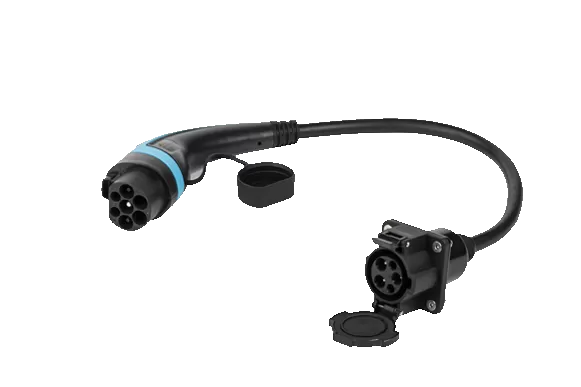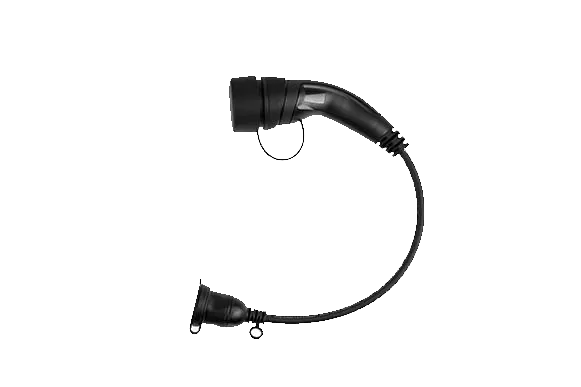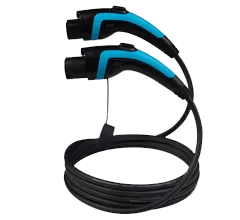
With the rapid development and popularization of new energy electric cars, an increasing number of consumers purchase electric vehicles. The accessories market brought about by the charging method of electric vehicles has emerged in the new energy vehicle market.
New energy electric vehicles can be directly plugged in to a 220V household power supply to charge. When consumers buy a car, the manufacturer will give away a home car charger, but their charging power is small, most of which are only 1.6KW. Take an electric car as an example: its battery capacity is 16.9 KWh, the time from 0 to fully charged is 16.9kWh/1.6KW=10.5h. The maximum current carried by the 220V household power supply is 16A, and the maximum charging power is 220V*16A=3.5KW. That is to say, to plug the electric car charging cord directly into a 220V, 16A household socket for charging, the charging power is about 3.3KW. Besides, it can match all new energy electric vehicles perfectly.
The specification, model, quality, and other factors of electric vehicle charging cables affect the charging power; simultaneously, the charging process puts forward higher requirements on the charging cable. The charging cable needs to transmit power and needs to control the charging action under necessary conditions to complete the charging process safely and reliably.
Next, we will introduce the correct charging method for everyone:
1. After the light turns green, continue charging for 2-3 hours.
2. The charging principle is shallow discharge and frequent charging. Even if the distance is not far enough, it must be charged in time to avoid recharging when the power is exhausted.
3. If you don't use it for a long time, you should charge it regularly (2-3 months).
4. For batteries that are not fully discharged for a long period, a complete discharge is carried out in about three months, that is, recharge all the electricity, which is beneficial to the activation of the long-term immobile materials in the deep part of the battery.